Category: Dhamma Lesson

These post contain quotes and dhamma stories

  • Who eats time? By Bhikku Buddhadasa

    Who eats time? By Bhikku Buddhadasa

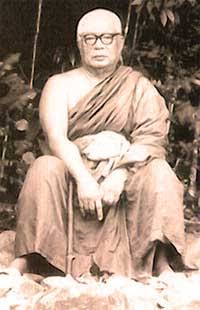
    The Buddha is recorded as saying that anyone who gets rid of tanha (ignorant desire) is someone who eats time. Usually it's time that devours; it devours people and all other living things. Would anyone who puts an end to desire, that one turns around and eats time, which means that time becomes a small matter, something to smile at, an inconsequential matter that can't eat or bite us." Ajahn Buddhadasa Bhikku

    Views: 2

  • Our problems today… Thich Nath Hahn

    Our problems today… Thich Nath Hahn

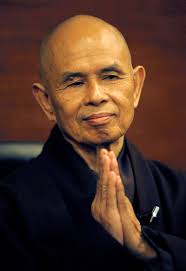
    Our problems today are no longer as simple as those encountered by the Buddha. In the twenty-first century, we will have to practice meditation collectively as a family, a city, a nation, and a community of nations. The Buddha of the twenty-first century Maitreya, the Buddha of Love, may well be a community rather than an individual. Sanghas that practice loving kindness and compassion are the Buddha we need. We can prepare the ground for bringing that Buddha to life, for our sake and for the sake of countless others, by transforming our own suffering and cultivating the art of Sangha-building. It is the most important work we can do.” “Thich Nhat Hahn

    Views: 1

  • If you know what he characteristics of….Ajahn Chah quote

    If you know what he characteristics of….Ajahn Chah quote

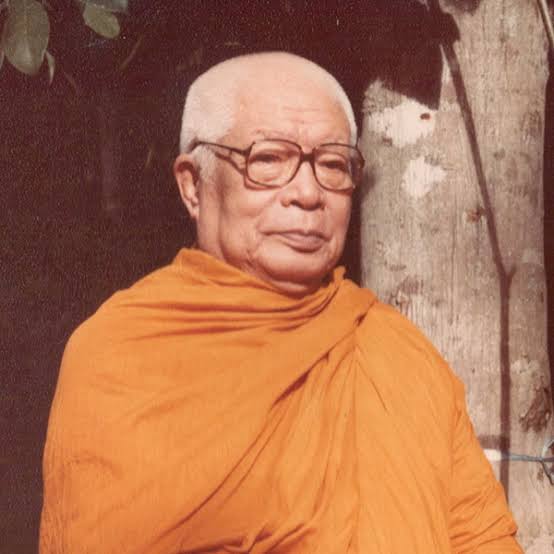
    If you know the characteristics of what is skillful and unskillful in physical and verbal behavior, you already see where to practice in order to give up what is unskillful and do what is good. When you give up wrong and set yourself right, the mind becomes firm, unswerving, concentrated. This concentration limits wavering and doubt as to body and speech. With the mind collected, when forms or sounds come, you can contemplate and see them clearly. By not letting your mind wander, you will see the nature of all experiences according to the truth. When this knowledge is continuous, wisdom arises. Virtue, concentration, and wisdom, then, can be taken together as one. When they mature, they become synonymous that is the Noble Path. When greed, hatred, and delusion arise, only this Noble Path is capable of destroying them.” Ajahn Chah

    Views: 1

  • Everything is ok

    Everything is just like this,  Everything is ok, resting gently in our relaxation & breathing,  Letting go, our true sweet nature is revealed

    Views: 0

  • Karma: The Choice is Yours, by Bhikku Buddhadasa

    Karma: The Choice is Yours, by Bhikku Buddhadasa

    Karma: The Choice Is Yours
    BY AJAHN BUDDHADASA| OCTOBER 20, 2017
    
    There are two ways to understand dependent origination, teaches Ajahn Buddhadasa. But only one leads to liberation.
    
    Ajahn Buddhadasa. Courtesy of Buddhadasa Indapanyo ArchIves (Bangkok).
    In the Pali suttas there are two descriptions of what occurred under the Bodhi tree at the time of the Buddha’s great awakening. In one version, appearing in various texts, the Buddha realized the three supreme knowledges. In the first true knowing, as it is generally understood, he recollected his former lives. In this account, as traditionally understood, he is able to recall his own previous births far into the distant past. These are invariably described as happening to the same person. In the second true knowing, he reviewed how beings carry on according to their actions (cutupapatañana), how beings pass away and reappear according to the karma they have done. Through the third true knowing, he realized the destruction of the impulses (asavakkhyañana). The out-flowing fermentations (asavas) are the deepest level of defilement; when they are completely ended, no further defilement, egoism, or suffering is possible. This is the more commonly recounted description of the night of the Buddha’s awakening.
    Elsewhere, the Pali texts state that the Buddha awakened to dependent co-arising. There also are accounts of the Buddha contemplating dependent co-arising immediately after his awakening, while he was still sitting under the Bodhi tree. Together, these give a second description of the Buddha’s great awakening. In the immediate aftermath, during the first four-hour watch one night, the Buddha examined dependent co-arising in the forward order, starting with ignorance, then concoctings, and so on, one after the other. During the second watch of the night, he reviewed dependent co-arising in the reverse order, starting from suffering, then birth, becoming, clinging, and so on all the way back to ignorance. Then for the third watch, he examined dependent co-arising in both forward and reverse orders until dawn.
    Between these two versions, the second is more reasonable and acceptable in light of the overall themes and threads of the Pali suttas. In the other account, the first knowledge concerning the recollection of past lives is in the language of eternalism, just as in the pre-Buddhist Upanishads, which speak of a self or an individual being born again and again over many lives. The belief that the same person is repeatedly reborn is eternalism, which Buddhism aims to eliminate. This idea has more in common with popular beliefs and the philosophy of the Upanishads than with the core of the Buddha’s message.
    At heart, Buddhism teaches the end of karma, living beyond karma, rather than carrying on according to karma.
    The second knowledge is about beings passing away and reappearing according to karma. This is generally understood to mean that the same being disappears from one existence (bhava) and reappears in another according to karmic influences somehow carried over from one existence to the next. However, this is not directly or specifically a Buddhist teaching. At heart, Buddhism teaches the end of karma, living beyond karma, rather than carrying on according to karma. The noble path is for freedom from karma; living under the sway of karma is limiting, distressful, and burdensome. It is not good enough to merely surrender to karma, to die and be reborn according to the fruits of our actions. In Buddhism, liberating insight must go further than that.
    Neither of these first two knowledges can be considered truly Buddhist principles. Why, then, are they included in the Pali scriptures? My own view is that perhaps the compilers of the discourses included these passages for the benefit of ordinary people. For those people unable to understand dependent co-arising and the end of karma, these passages were included for the sake of morality. Consequently, this is an account of the Buddha’s awakening for the moral benefit of ordinary people.
    The second account puts dependent co-arising at the center of the Buddha’s awakening. Not only did he express his awakening in these terms but he also described how he pondered and contemplated dependent co-arising both before the awakening and immediately after. After experiencing the bliss of liberation for a week, he examined and investigated dependent co-arising throughout at least one night, the first watch of which focused on how dependent co-arising occurs. He repeatedly investigated this in the forward order from ignorance to concoctings on through suffering. He spent four full hours thoroughly penetrating this truth. In the next four hours, he investigated the causality of dukkha in careful detail all the way back to ignorance. In the final four hours, he examined dependent co-arising in both directions, forward and backward. This shows the central importance of dependent co-arising. The formula recorded is brief and succinct—the Buddha looked into it forward and backward for twelve hours without a break. He had the most profound spiritual experience of this through each of the watches: forward order, reverse order, and both forward and backward, each for four full hours. Please consider how profound, how difficult, how subtle, and how important this is. This ought to be of great interest to all serious meditators.
    The words we have translated as “forward order” and “reverse order,” or “forward” and “backward”—anuloma and patiloma—can be understood rather broadly. Thus, for clarity’s sake, we can explain anuloma, “with the hairs,” as the examining of the arising sequence, that is, dependent co-arising. The reverse, patiloma, “against the hairs,” is the quenching of dependent co-arising, that is, dependent quenching. In the first watch, the Buddha investigated and reviewed how dependent co-arising arises. In the second watch, he investigated and reviewed how it quenches. In the final watch, he investigated and reviewed both. This understanding is eminently reasonable and fully supported by the core themes of the discourses.
    Please consider this important question: Have you ever practiced like this? Have you ever investigated dependent co-arising in the way that the Buddha did before, during, and after his awakening? We suggest that you examine and scrutinize dependent co-arising in the same great detail, with the same sincerity and intensity. Then, you might understand it like he did. You will find it worth your while to follow the Buddha’s example.
    
    Two Understandings of Karma
    This is a good place to consider karma. After all, it parallels the dependent co-arising teaching, though with less precision and depth. In the first account of the Buddha’s awakening, the second knowledge suggests that beings carry on after death according to their karma. The difficulty with this understanding is that we cannot take this as the understanding of karma in line with core Buddhist principles. Rather, this understanding is simply the standard version of karma that existed in India before the Buddha’s time. Before the Buddha’s awakening, the Upanishads already taught that beings are reborn after death according to the workings of karma. Even Christianity, at least mainstream forms, teaches pretty much the same. If that is not the true Buddhist teaching, then what is?
    In Buddhism, the central teaching on karma is about the practice that makes karma meaningless, “the karma that ends karma.” This karma transforms us beyond all the influences of karma, which is the unique, more profound aspect of the Buddha’s karma teaching. The idea that doing good deeds leads to good results and doing bad deeds leads to bad results was a general teaching that existed before the Buddha’s time. The Buddha did not deny or object to such karma doctrines, which were already common before he appeared and are found in some form in all religions. However, such teachings were not sufficient for his purpose: the end of suffering. Therefore, the Buddha went further. His real teaching is about not being trapped by karma, thus transcending karma and its consequences.
    To be trapped forever in the prison of karma is not Buddhism. If everything constantly happens to us according to karma, there could never be any liberation.
    Allow me to reiterate that most of the books on Buddhism with chapters on “Karma and Rebirth” are not correct, not if they really intend to represent Buddhism. If we are to explain “Karma in Buddhism,” it is not enough to teach that good actions bring good fruits, bad actions bring bad fruits, and we inevitably receive the fruits of our good and bad karma. Properly, a Buddhist explanation must focus on “the karma that ends all karma.” The practice of the noble eightfold path is that karma that ends all karma. The Buddha’s teaching on karma is to be free of karma, not trapped by it, so that karma has no more power over our lives.
    The Buddha Perfected the Teaching of Karma
    To be trapped forever in the prison of karma is not Buddhism. If everything constantly happens to us according to karma, there could never be any liberation. For a teaching and practice to be Buddhism, we must be liberated from the power and oppression of karma. A teaching that merely reiterates the old approach cannot be the true Buddhist teaching. It must be completed to the extent of liberation to be Buddhism. Thus, the Buddha needed to teach the karma that ends karma. He took the kind of karma that does not explain liberation and perfected it so that liberation from karma became the central point.
    “Beyond karma” is a teaching above and beyond the world, or a lokuttara teaching. The ordinary karma teachings are part and parcel with the world (lokiya). Lokiyadhamma is for the mind still trapped in worldly conditions. Lokuttaradhamma is for the mind free of and beyond worldly conditions. The Buddha accepted a number of the old teachings, perfecting them within his lokuttaradhamma system as he did so. The Buddhist teaching on karma—the noble eightfold path that ends karma—is a perfect example of how the Buddha completed the old teachings and traditions.
    The Buddha accepted some teachings that existed in India before his awakening, such as non-vengeance (avera), non-harming or nonviolence (avihimsa), the five sila, various samadhi practices, and the form and formless jhanas. All of these are older teachings and practices that he did not reject. Instead, he further developed, completed, and perfected them. Please be aware that Buddhism contains a certain amount of older teachings and practices that the Buddha included, deepened, and completed for the sake of quenching dukkha. Understanding this fact is important so that we will not confuse the old versions of such teachings with the new, perfected versions.
    The Buddha completed the Upanishadic teaching on karma and the like. To do so, he taught the end of karma.
    Two Levels of Teaching
    These examples clearly show that there are two levels of teaching, both of which are necessary. One is for the sake of morality, for those who still believe in and hold to self. The moral level of teaching is necessary for those who can only understand things in terms of me and mine, who require moral and therapeutic teachings that operate on a worldly level. It teaches people how to live in the world morally and peacefully, to be less selfish about the selves to which they cling, and thereby suffer less.
    You can continue rebirthing yourself in a worldly way, but with healthy morality, not harming others and living relatively peacefully.
    For those aiming higher, the Buddha’s teaching focuses on letting go of self, that everything is not-self and nothing is worth clinging to as me or mine. This level does not ignore or reject the moral teachings; it simply goes beyond them. This is the more comprehensive transcendent level of ultimate truth that truly liberates from all suffering. If both levels are understood, there is no conflict between them. They can coexist for the sake of both those who want to live in and of the world (lokiya) and those aiming to live above and free of the world (lokuttara), in it but not of it.
    Each person decides their own preference and way. If you want to travel the paths of the world and have no wish to transcend the world, you can follow the worldly teachings and receive the moralistic explanation of dependent co-arising given by various commentators. You can continue rebirthing yourself in a worldly way, but with healthy morality, not harming others and living relatively peacefully. If you want to be free, to transcend the world and no longer be caught by all its trappings, you must study the transcendent teachings such as “the end of karma” that do not involve self. For this, we have the dependent co-arising of ultimate truth that enables us to see through all the concoctings of self. Dependent co-arising also has these two levels or two models. The choice of which to follow is yours.
    Adapted from Under the Bodhi Tree, from Wisdom Publications, 2017.
    

    Views: 9

  • There are no chains

    There are no chains

    Views: 4

  • Dana from Text file, not my writing

    Dana
    Teachers listed with the Open Sangha Foundation as individual instruction  do not 
    charge students fixed  amounts but rather accept donations from them. This means 
    that students can contribute what they are able to based on their circumstances. 
    
    This is dana in action.
    
    Dana, which translates as ‘sharing’ or ‘generosity’ in English, is an important and 
    rich concept across the Buddhist traditions, not least in how it relates to the 
    teaching and learning of the Dharma.
    
    From the time of the Buddha to the present day, monastic sanghas do not charge for 
    access to the teachings. Instead teachings are offered as a gift, as dana, with an 
    open and compassionate heart to those that seek them. In response to this priceless 
    gift, people in turn have supported their teachers, out of generosity, out of dana, 
    and from a place of responsibility and so ensured that their teachers can continue 
    to share the practices and teachings. Traditionally, this would take the form of 
    offering food, clothing or medicine to the monks and nuns. 
    
    While this traditional paradigm is still the norm in most heritage Buddhist cultures 
    and communities, it is an aspect of the teachings that has been  neglected by some as 
    Buddhism has spread globally in the 20th and 21st centuries. Instead the Buddhadharma 
    is often taught and learnt in something more akin to a capitalistic paradigm. This 
    paradigm creates barriers to the Dharma, limiting who can access it, and alters the 
    nature of the transmission in a potentially problematic way.
    
    In the Open Sangha Foundation we are encouraging and supporting teachers to teach 
    within a traditional dana based context to whatever extent they feel moved and able 
    to. For this model to flourish outside of heritage Buddhist cultures though both 
    teachers and students of the Buddhadharma need to train in and trust in each others’ 
    generosity. This acting from generosity then has the potential to form an integral 
    part of our Dharma practice, as teachers and students, and allows us to divest ourselves 
    from modern naratives of separation and take on greater responsibility in our 
    relationships and in our lives.
    
    
    https://youtu.be/kQvlHo9aYQY

    Views: 4

  • A Deep Spring of Happiness

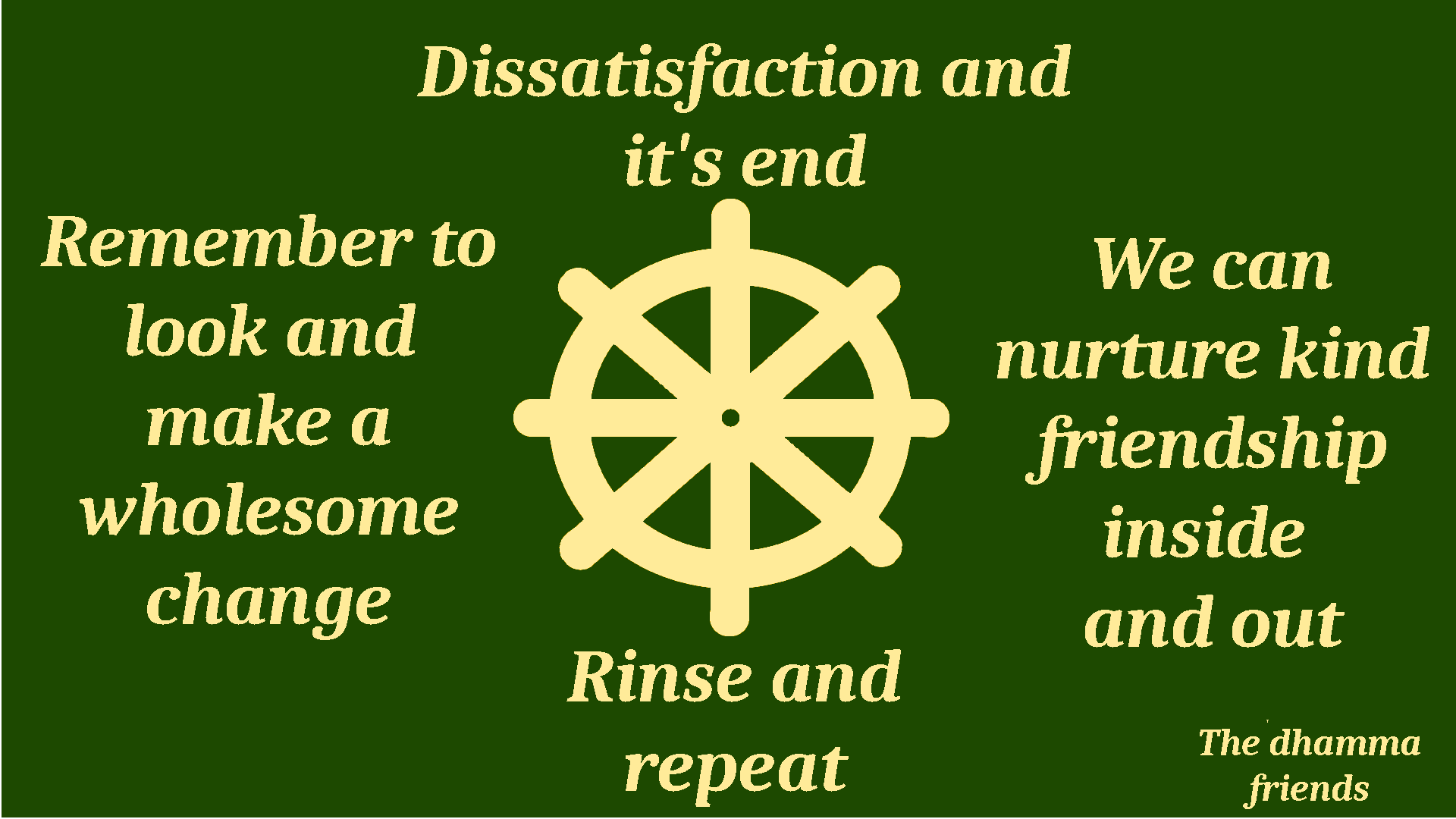
    The Buddhist world is overflowing with academic minded people who hold up a clipboard of sutta criteria to evaluate your experience and see if it fits what that nonlivivng text says. But that’s not where or what the Dhamma is. The Dhamma is this very real, very alive, bottomless well of happiness that flows inside, covered over by greed, hatred, and delusion, muddied by hinderances, distorted by this cyclical pursuit of stimulating activities. But despite all that obstruction, when we can stop, it takes only a slight turn in the right direction to see this happiness that’s always already here. And when you see it, stay with it and be satisfied. As you remain looking at this causeless happiness, it will grow and overflow all the defilements that once covered it over, and the endless seeking for stimulating sensory activities, stimulating ideas and answers, will become valueless, like straw in your hand. “Problems” that once occupied decades of discussions will look like a single grain of dust on your pants, and you’ll laugh or giggle when they arise in the mind, starved for attention. It’s really that simple, there’s nothing to it. Don’t worry, be happy.
    Views: 1

  • Autobiography In 5 Short Chapters

    Chapter I:

    I walk down the street. There is a deep hole in the sidewalk. I fall in. I am lost… I am hopeless. It isn’t my fault. It takes forever to find a way out.

    Chapter II:

    I walk down the same street. There is a deep hole in the sidewalk. I pretend I don’t see it. I fall in again. I can’t believe I am in this same place. But it isn’t my fault. It still takes a long time to get out.

    Chapter III:

    I walk down the same street. There is a deep hole in the sidewalk. I see it there. I still fall in… it’s a habit… but, my eyes are open. I know where I am. It is my fault. I get out immediately.

    Chapter IV:

    I walk down the same street. There is a deep hole in the sidewalk. I walk around it.

    Chapter V:

    I walk down another street.

    Views: 2

  • Silent Poetry

    When we are walking in nature all things disappear, when we practice Silence of the heart the Dhamma is revealed within us, the wind on our face in the graveyard, the grass on our skin, all is well right here n now, what more could one ask for?, when we walk in the warm sun beams, Where do questions & answers go? When we smell the sweet flowers fragrance, where does politics & religions go? When we Laugh gently & with Wholesomnes, Where does buddhism & meditation practice go? All is Mara Save Satisfaction, all is dukkha Save Silence & remaining calm❤️🌱🌲🌄

    Views: 2

  • Remaining calm

    There’s a Quote by Sri Ramana Maharshi that is used & taught often by His student Robert Adams,  it basically goes like this,  ” Whatever occurs,  don’t react, good or bad,   remain calm in all situations,  this is the only practice one needs , is  not react”   , I Love this Wholesome Thought so much,  especially for it’s straightforward message & brilliant simplicity,  often it remains in the forefront of my mind as a Mantra,  it has become a very important cure all Wholesome thought that transforms any dissatisfaction into pure joy & peace,  also i enjoy meditating on Silence of the heart,  an Actual Title of one of Robert Adams Books, we don’t necessarily have to be quite in outward speech,  but it does help,  when not only our speech but especially our heart is Silent,  all negativity,  all dissatisfaction seems to be burnt up in the beautiful flame of pure unborn awareness,  gladening the mind here n now, questions don’t even arise,  answers don’t mean anything,  self, not self, soul no soul doesn’t even appear anywhere in the clear waters of the Mind , all is well 💙

    Views: 4

  • The Saturday Night Sangha

    The Saturday Night Sangha

    Hosting the Saturday sangha call on Discord has been beneficial beyond measure.

    The mind comes back again and again to Dhamma, and enthusiasm honing the skills of the Noble Eightfold Path.

    Not only for myself but for others as well. Being able to share this wisdom is a blessing in itself.

    It’s wonderful to talk to people who understand this wisdom and share it. We cultivate and grow together with noble friendship.


    If you are interested in joining the meetings it’s at 7 pm EST on Discord. Link below

    https://discord.gg/VzczkNX63v


    Views: 1

  • Be here Last Tuesday

    The ego aka character we develop can only appear to exists in the past or future,  this false idol is the Dukkha creator,  remembering to look for dog dookie on our island 🏝 walk is great Sati as we walk around the dookie staying shining & clean,  but I have experienced a deeper level,  as Buddhadasa Bhikkhu spoke of, the head of the snake,  the Dukkha creator,  the ego self character,  the ” I, my, me mind” , in the island 🏝 dookie analogy,  this would be a dirty dog on our island shitting everywhere,  avoiding the Dukkha is great,  but I have found also sending the ego false self dog on a boat 🐕 to another island is also a great solution because sure other animals may leave some droppings around,  but once the main culprit is gone,  avoiding the dookie is much easier with no dookie creator insight,  & for this I use the wholesome thought of remembering there is no ego character of me, it exsist only in a false ghostly past and future biological thought pattern,  a story that builds momentum & strength only if we allow it, only if we forget to remember to look lol😂,  our true nature is not a self really,  it’s like emptiness,  Silence of the heart,  peace,  pure unborn ever present awareness,  unattached to cognitive biological functions,  the the Dhamma,  Truth, nature shines bright right here,  right now,  in one sense it can be described as just this, here, like this now, very plain , unexciting,  yet on the other yinyang hand it is completely mind blowing,  Magikal & miraculous,  yet also none of these things ☯️☺️

    Views: 1

  • What is going on right now

    What is going on around you right now?

    I will tell you what is going on around me right now. I am sitting at home, it’s late at night. It’s a bit cold, but the heater will kick on soon enough. And I can always grab a blanket. There is a light next to me, and a wood wall behind the computer. I feel good.

    Now that we have a little bit of raw data to examine. Let’s consider why it’s important to be here now.

    Our memory is fallible, but what you are aware of and can sense around you right now is freely available. It’s a direct experience. No need to remember anything, no need to rely on memory. Not until we really want to or feel like it at least.

    If you try and hold on to a single thought… lets try and do a little peter pan exercise, think of a single happy thought. and try to hold on to it.

    Of course you’ll probably want to close your eyes, since it’s easier that way. But even with eyes closed, it’s quickly obvious just how difficult and slippery memory is. How rapidly a thought can fade into memory, and how hard we have to focus in order for it not to.


    But when you open your eyes, and you just look around. When you are just aware of what is here now, you can feel there is no strain. And there is no fallibility like with memory… lol, well if you are the philosopher type you might draw swords with me there on the “no fallibility” statement. But let me have it, and I will concede that the sense are…pretty much infallible 🙂

    And if you are skilled, you should also be able to feel peace. Memory is where most of our pain comes from. Books have been written about pain, so I won’t go much into it. But just try to analyze pain while you are practicing these things we talked about. Try to see, in real time and direct experience, how your ability to be here now is directly related to the pain felt from memory. The more skilled you are at being here now, the less pain you feel from memory.

    -Corey Lupo

    Views: 2

  • Reality is perfect

    Don’t worry,  be Happy dudes,  i Love you guys!☺️☯️🙏🏾🌄❤️

    Views: 1

  • Reminder

    Be thankful for the things you have. Be thankful for being alive today. So be responsible and make the most out of it by living an ethical life.

    Views: 1

  • Dana

    Dana, this means generosity,  Giving freely & wisely to all beings,  in this modern age many teachers & groups have been consumed by greed & power,  this is ok, if they want this type of lifestyle let them enjoy it & all that comes with it, but for the individuals realizing some balance and wisdom,  it’s good to donate,  food, money to organizations that are truly deserving of such blessings because of one fact, they are earnestly attempting to help end suffering not only for themselves but also for the world, Charity is a giant pillar of Buddhism often forgotten,  generosity seems to be most apparent in peoples lives when they have an audience seeing just how generous they are lol, it’s better to give and not make a big show of it, it’s better to realize full enlightenment and be humble not arrogant or judgmental of others beliefs or attempts at freedom,  if we are truly noble ones we are the cream that rises,  but if we remain ignorant,  greedy, judging,  thinking we are somehow special,  more important,  surely we will fall like Lucifer to the icy colds of Hell, so in closing dear friends,  don’t be a door Matt,  God gave us a brain for a reason,  use it wisely,  give freely,  be compassionate,  have a kind heart,  be generous,  help support Sanghas,  churches. Temples,  people,  animals,  Generosity,  Humility,  open mindedness,  & Loving kindness are sure fire ways to Sukka here & now, it’s like this moment here

    Views: 2

  • The Highest Protection

    “Not consorting with fools,

    consorting with the wise,

    paying homage to those worthy of homage:

    This is the highest protection.

    Living in a civilized land,

    having made merit in the past,

    directing oneself rightly:

    This is the highest protection.

    Broad knowledge, skill,

    well-mastered discipline,

    well-spoken words:

    This is the highest protection.

    Support for one’s mother & father,

    assistance to one’s wife and children,

    consistency in one’s work:

    This is the highest protection.

    Generosity, living in rectitude,

    assistance to one’s relatives,

    deeds that are blameless:

    This is the highest protection.

    Avoiding, abstaining from evil;

    refraining from intoxicants,

    being heedful of mental qualities:

    This is the highest protection.

    Respect, humility,

    contentment, gratitude,

    hearing the Dhamma on timely occasions:

    This is the highest protection.

    Patience, being easy to instruct,

    seeing contemplatives,

    discussing the Dhamma on timely occasions:

    This is the highest protection.

    Austerity, celibacy,

    seeing the noble truths,

    realizing unbinding:

    This is the highest protection.

    A mind that, when touched

    by the ways of the world,

    is unshaken, sorrowless, dustless, at rest:

    This is the highest protection.

    When acting in this way,

    everywhere undefeated,

    people go everywhere in well-being:

    This is their highest protection.”

    Views: 2

  • Best thing iv ever done

    Meeting Dhammarato and practicing the real teachings of the buddha is one of the greatest things I have ever done 🤜🤛

    Views: 1

  • Let go

    Gently resting in the way things are . . .Ajahn Chah

    Views: 1